
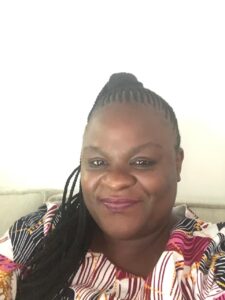
Cathy Amenya is passionate about community-led development, gender integration, and peacebuilding. Currently serving as Program Manager at the Movement for Community-led Development (MCLD), she leads strategies for strengthening non-violent social movements globally.
Her expertise spans gender-responsive programming, conflict resolution, and community-led development across the Great Lakes Region. She has provided technical guidance to project teams addressing gender-based violence while cultivating networks with national and international stakeholders to advance gender equality and peaceful coexistence.
Cathy has contributed insights on women’s land access, transitional justice, violent extremism and decolonizing peacebuilding approaches. Her work emphasises inclusive development practices and gender equality.
Cathy brought to Peace Connect her passion for grassroots engagement, decolonial approaches to peacebuilding, and dedication to amplifying local peacebuilders voices.
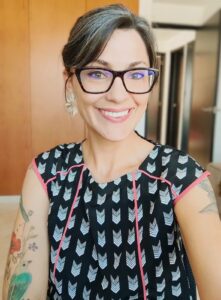
As co-founder of Agenda Joven, Lina Maria has supported youth leaders across Colombia to drive territorial development and collective advocacy. In recognition of her long-standing commitment to youth-led peacebuilding, she was honored with the Pillar of Peace Award in 2023. She also mentors young Latin American leaders through the Reinventing Democracy in the Digital Era initiative, guiding the design and implementation of grassroots peacebuilding strategies.
Lina has led MEL and research teams across national, regional, and global levels within the UN system, INGOs, and Colombia’s public sector. She brings deep expertise in building theories of change, MEL plans, and strategic planning tools for complex peace and development initiatives.
Lina is passionate about building inclusive, sustainable peace through learning, collaboration, and locally driven solutions.
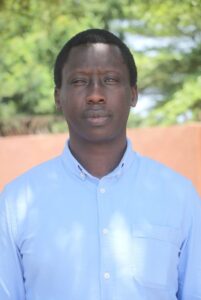 Landry is an environmental activist, peacebuilder, and Pan-Africanist from Burundi, passionate about advancing renewable energy and climate justice across the continent. He has dedicated his career to fostering a peaceful and sustainable future for Africa through local peacebuilding initiatives, critical analysis and advocating for policies and solutions that promote clean and just energy transitions and dismantle fossil fuel dependency.
At 350Africa.org, Landry leads efforts to build a powerful climate movement, advocating for policies and solutions that promote clean and just energy transitions and dismantle fossil fuel dependency.
He is committed to scaling up climate solutions and advocate for robust peacebuilding initiatives in the Great Lakes region.
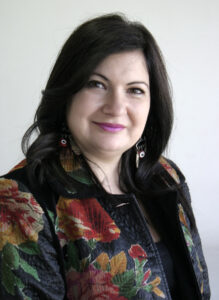
Sawssan Abou-Zahr is a Lebanese journalist, editor and translator as well as a feminist and human rights activist with nearly 28 years of experience. As she practices peace journalism, she believes journalism is not a profession, rather a form of social activism and a medium to promote democracy, peacebuilding and human rights via storytelling.
Sawssan is the local partner/peacebuilding expert in Lebanon with Peace Direct since 2014, writing about peacebuilding, reconciliation and accountability in Lebanon, as well as some special articles about Libya, Sudan and Syria. She served in 2016 and 2018 as a jury member for Tomorrow’s Peacebuilders Awards; and in 2021 for JusticeCall contest on Arab youth and peacebuilding. She was a speaker at World Press Freedom Day in Jakarta in 2017 on portrayal of Syrian refugees in Lebanese media. She is a Beyond Borders Women in Conflict 1325 Fellow, and is since December 2019 a member of Peace Direct’s Global Advisory Council. She took part in #ShiftThePower summit in December 2023 in Colombia.
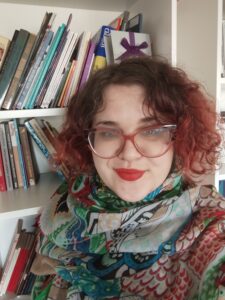
A writer by education, Galina Maksimovic is a feminist and anti-fascist activist. She is employed as the program coordinator at Reconstruction Women’s Fund, the first and – so far – the only local feminist and peace fund in Serbia, emerging from the movement and being a part of the movement. She finds purpose working directly with anti-nationalist, anti-militarist, anti-racist women’s and women-led grassroots groups. Within this layered field, she is particularly interested in narrative bridges translating individual experiences into collective actions for common advance. Guiding her through activism and philanthropy is the advice, “Never ever do stuff alone”. In her work, she values internationalism and space to produce transversal views of common points and struggles.
Galina is also active in diverse, mainly non-formal, anti-classist, queer, anti-militarist, feminist initiatives. She also writes about film, theatre, short stories and poetry.
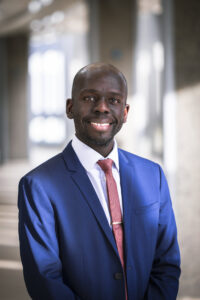 Rehema Mussanzi was the Executive Director of Centre Resolution Conflits (CRC), a peacebuilding organisation active in the provinces of Ituri and North Kivu in eastern Democratic Republic of Congo (DRC), from 2019 to 2024. CRC’s work focuses on rebuilding trust between conflict-affected communities by way of dialogues as well as reconciliation initiatives; community-based reintegration of ex-combatants including former child soldiers; provision of counselling to victims of violent conflicts; and training community leaders on peaceful cohabitation & community development, among others. He is highly passionate about contributing to the restoration of peace in the DRC and is an advocate for the shifting/sharing of power to/with local actors in the peacebuilding process.
Rehema believes that true sustainable peace can only be attained as and when local actors including, but not limited to, youth and women are involved in the peacebuilding process. He now works in the medical technology sector, while still acting as an advisor to CRC’s new management team. He is also on Peace Direct’s Global Advisory Council.
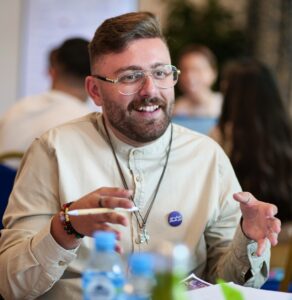 Qais is from Jordan. He is a dynamic leader and advocate with extensive experience in youth development, human rights, and community-driven peacebuilding. As the CEO and Head of Programs at Drabzeen for Human Development and Founder of the Eltazim Initiative, he leads efforts to empower marginalized communities, promote gender equality, and create safe spaces for youth across Jordan.
With a strong foundation in advocacy, policy development, and grassroots mobilization, Qais has collaborated with international organisations including Terre des Hommes and the Lutheran World Federation—focusing on child protection, safeguarding, and women’s economic empowerment. He is skilled in designing impactful advocacy campaigns, fostering strategic partnerships, and leading gender-sensitive programming.
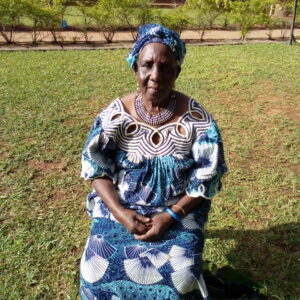 Rosalba Oywa is from Uganda. Rosalba has many years of experience in rural development, Humanitarian aid and founded a local Peace initiative, People’ Voice for Peace (PVP) which has been a sustained voice for peace in Northern Uganda since 1995 to date.
In addition to peace-building at the community level, PVP has played a direct role to influence a formal negotiated peace settlement between Government of Uganda and the Lord’s Resistance Army rebels by providing relevant research information about people’s interest, needs and expectations of the negotiating outcome thus contributing to the existing relative peace in Northern Uganda. The collaboration and linkages created between civil society organisations in the war affected areas and national level helped to raise the profile of the conflict in Northern Uganda at national and international levels.
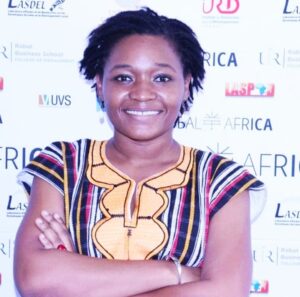 Martine Kessy Ekomo-Soignet is a peacebuilding expert, social entrepreneur, and founder of Peace & Development Watch, a think tank based in the Central African Republic (CAR) that promotes inclusive governance, civic engagement, innovation and local leadership in peace and development. With over a decade of experience working with UN agencies, international NGOs, and local communities, Kessy has led over 30 national-level evaluations and strategies on conflict prevention, youth participation, good governance, radicalization, and humanitarian response.
She is also Vice-President of the Central African Business Confederation (GICA) and serves on several high-level advisory boards, including the UN’s Progress Study on Youth, Peace and Security (UNSCR 2250), the African Union, and the PATHFINDERS initiative. She is the first Central African recipient of the Choiseul 100 Africa Prize.
She is a former member of Peace Direct’s Board of Directors and has collaborated with the organization since 2014.
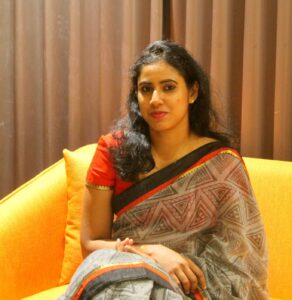 Kaushalya Ruwanthika Ariyathilaka is the Manager – Programmes and Grants at the Neelan Tiruchelvam Trust (NTT), a local grantmaking organization dedicated to peace and justice in Sri Lanka. The Neelan Tiruchelvam Trust was recognized as one of the 19 local organizations to watch in the world by Devex in 2024. Kaushalya is committed to working towards the dismantling of inherent power inequalities within the grantmaking/development system that excludes grassroot and community-based organizations from accessing resources.
Kaushalya was a Shift the Power fellow from 2023-2024 and was also a fellow of the US State Department Professional Fellowship program for Asia Pacific. Kaushalya holds a bachelor’s degree in politics, Philosophy and Economics from the Asian University for Women, Bangladesh. She held a Rockefeller Foundation scholarship and was a Dr. Muhammad Yunus fellow during her undergraduate studies at the Asian University for Women. Kaushalya was an investigative student journalist for Dispatches International, Canada, and wrote pieces with a focus on violence against women in Bangladesh. Before joining the NTT team, Kaushalya served as the Senior Manager Fundraising at Transparency International Sri Lanka. Kaushalya also worked with the Human Rights Commission of Sri Lanka from 2017-2019 as the UNDP project coordinator.
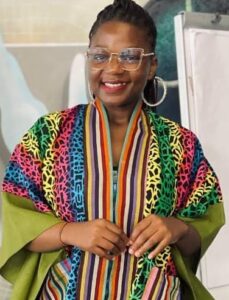 Susan Wamalwa is a dynamic young woman from Kenya, dedicated to promoting gender equality, women and youth peace and security, climate justice, and minority inclusion, with 5 years’ experience in the NGO sectors implementing programs in the Horn of Africa region. Her active involvement in networks such as the Young Women Mediation Network, Global Peace Hub, African Women Leadership Forum, and African Women Leadership Network and United Network of Young Peace builders, highlights her commitment to increasing women’s representation in Peace mediation, Peacebuilding and governance.
Susan excels as a mediation trainer, equipping young people with conflict resolution and dialogue facilitation skills. Her project management expertise allows her to oversee initiatives aligned with strategic goals, while her financial management skills ensure budgetary sustainability. Through grassroots community engagement, she amplifies voices advocating for gender equality. As an alumna of ACCORD, Clingendael Academy, and Uppsala University, Susan is well equipped in mediation, negotiation, and dialogue, furthering her impact on youth empowerment and sustainable development across Africa.
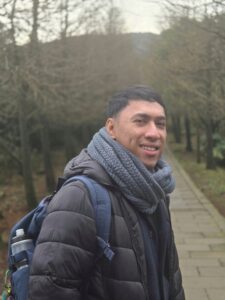 Marc Batac is an activist-organiser, peacebuilder, facilitator, researcher and university teacher based in Manila, Philippines. The focus of his practice and study is on contentious politics and social movements, the intersection of peacebuilding and resistance, and the (mis/ab)use of national security undermining the rights, dignity and safety of most marginalized communities under repressive and violent contexts in Southeast/East Asia.
In 2024, he co-founded the Security Intersections and Alternatives (Southeast Asia), an emergent collective of Asia-based organizations, activist-organizers, peacebuilders and scholar-practitioners gathered around a need for new transformative visions of security, and a paradigm shift, in policy and practice, from security as control to security as care.
Marc currently teaches about social movements and organizing in the University of the Philippines-Diliman, He is a community member of Reimagine Peacebuilding, and part of the Global Advisory Council of Peace Direct.
 Mihajlo Matković is a passionate youth worker dedicated to non-formal education, peacebuilding, and youth engagement, currently pursuing a Master’s degree in Postcolonial Literature in English. For the past four years, he has been a member of the CIVICUS Youth Action Team, where he focused on youth trends in activism, peacebuilding initiatives and, most recently, ICSW2025 Youth Assembly-related processes led by YAT. Furthermore, engaging in initiatives like the Council of Europe’s campaign “Democracy Here, Democracy Now” and contributing to Human Rights Education as a junior trainer at two national COMPASS training courses in Serbia underscores his ongoing commitment to promoting democracy and human rights. Moreover, participating in the MIRAI Western Balkans Meet Japan peacebuilding program had a profound impact, especially his visit to Hiroshima in 2022, which catalysed his dedication to disarmament efforts.
This passion led Mihajlo to become one of the UN Youth Champions for Disarmament at UNODA in 2024. He served as a Serbian UN Youth Delegate for the mandate 2023/24, where his focus on SDG4 and SDG16 drove his commitment to sustainable development and the promotion of the Youth, Peace and Security Agenda. For his youth work and advocacy, he was honoured with the prestigious Diana Award in 2023.
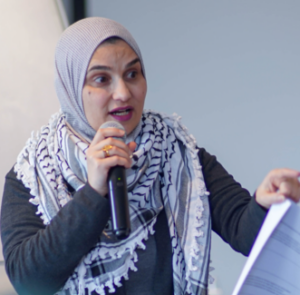 Wejdan Jarrah is a practitioner in the humanitarian and development sector, currently serving as the Regional Representative for the Network for Empowered Aid Response (NEAR). With both a Bachelor’s and a Master’s degree in psychological counselling, she brings over 16 years of experience working with international NGOs and as a senior roster member in psychosocial support. Wejdan’s career bridges hands-on crisis response and organisational development, fueling her passion for system change, movement building, safeguarding and protection, coaching, and facilitation. Her work now centres on advancing localisation and strengthening networks to promote more equitable and community-driven humanitarian action.
Halima Mohamed is the Co-Founder and Executive Director of Coast Education Centre (COEC). For the last 15 years, she has been on the forefront of agitating for the rights of women and girls at the grassroots level in Kenya and East African Region. Halima has been involved in various National , Regional and County processes to promote and protect women’s rights and girl-child rights. Her areas of expertise are in gender and equality rights, digital security, African Governance & Conflict Management and Preventing & Countering Violent Extremism expert on Woman and Girls Matters.
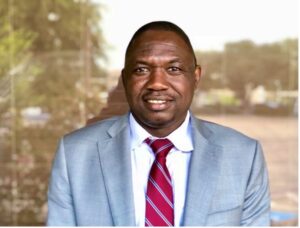 Quscondy-Mohamed is a Regional Adviser at Freedom House, where he focuses on building and supporting grassroots human rights initiatives to amplify local voices and improve evidence-based self-advocacy. He was a Research and Advocacy intern in Washington with Peace Direct in the summer of 2017, where he implemented Sudan advocacy and research activities.
Quscondy-Mohamed spent more than 10 years in the East and Horn of Africa Sudan, Ethiopia, and Uganda, working on peacebuilding, youth leadership, and human rights advocacy. He was the founding staff of Sudan Democracy First Group (SDFG), a Sudanese advocacy and think tank organization, where he supported youth and women-led initiatives with leadership programs.
Before joining SDFG, he was a Sudan Human Rights Monitoring Associate at the African Center for Peace and Justice Studies (ACJPS). Quscondy-Mohamed began his human rights and peace activism at Khartoum university in 2003, where he co-founded the Darfur Students Movement against the genocide in Darfur.
He is the winner of the Civil Society Leadership Award from the Open Society Foundation in 2016 for his role in youth and civil society leadership for peace and democracy in Sudan. He holds dual masters in Sustainable International Development and Coexistence and Conflict Resolution at Heller School for social policy and management, Brandeis University. He did his BA in development studies at Kampala International University, Uganda.
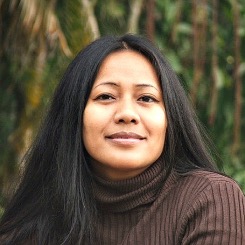 Binalakshmi “Bina” Nepram is an indigenous scholar and human rights defender, whose work focuses on deepening democracy and championing women-led peace, security, and disarmament in Manipur, Northeast India, and South Asia.
She is the founder of three organizations: the Manipur Women Gun Survivors Network, the Control Arms Foundation of India, and the Global Alliance of Indigenous Peoples, Gender Justice, and Peace and authored and edited five books, including Deepening Democracy, Diversity, and Women’s Rights in India (2019), Where Are Our Women in Decision Making? (2016), and South Asia’s Fractured Frontier (2002). Her work has garnered international recognition, including the Anna Politskovskaya Award (2018), Women have Wings Award (2016), CNN IBN Real Heroes Award (2011), Ashoka Social Innovators Fellowship (2011), and the Sean MacBride Peace Prize (2010).
In 2013, the U.K.-based Action on Armed Violence named her one of “100 most influential people in the world working in armed violence reduction.” Ms. Nepram served as an IIE-SRF Visiting Scholar at Connecticut College in 2018–2019 and at Columbia University in 2017–2018. She is a board member of the International Peace Bureau, the 1910 Nobel Peace Laureate.
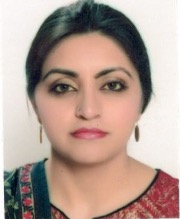 Gulalai Ismail, is the founder and Chairperson of Aware Girls; a young women-led organisation working towards gender equality and peace which she established at the age of 16. She is a highly motivated women’s rights and peace expert, founder of the first even young women and girls led organisation Aware Girls working for women empowerment, peacebuilding and countering violent extremism, with over 13 years of experience of human rights and peace work. She is among the young people who advocated for a UN Security Council Resolution on “Youth, Peace and Security #2250”. She is now advocating for Youth Peace Policy of FATA and Khyber Pakhunkhwa.
In 2009, she established a Youth Peace Network in Khyber Pakhtunkhwa Province, Federally Administered Tribal Areas and Afghanistan to counter violent extremism through promoting peace activism among young people, preventing young people from joining extremism groups, promoting non-violence and pluralism and engaging young women in peacebuilding process.
In 2015 she extended Youth Peace Network to Afghanistan to work with young people of Afghanistan on non-violence and conflict resolution. In 2017 she established Pak-Afghan Pul-e-Niswan Baraye Aman (Pak-Afghan Women Peace Network) to bridge women peace activists of Pakistan and Afghanistan for countering radicalization and violent extremism. She has received 2009 YouthActionNet Fellowship, 2012 International Democracy Award, 2014 Humanist of the Year Award, 2015 CommonWealth Youth Award for her efforts in building peace, gender equality, and development.
She has been recognized among 100 Leading Global Thinkers by Foreign Policy, 2013 and among “30 Under 30” youth activists by National Endowment for Democracy, USA. She received Chirac Peace Prize for her work on building peace, conflict resolution and countering violent extremism.
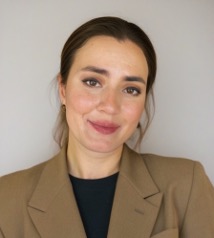 Diana is a development practitioner, researcher, and heritage artist. A former Chevening and Schwarzman Scholar, she has played a key role in shaping innovative academic programs and technical education courses.
Her writing and art focuses on civil society and peacebuilding, and she is recognized as one of the top 50 voices in the MENA region on LinkedIn for women’s empowerment, and among the top 20 overall in Jordan. Diana’s work has been featured by Jordan News, Peace Direct, and UNESCO, among other platforms.