Iranian authorities have responded to these protests with unprecedented force – killing thousands of people who peacefully protest for their right to an ordinary life. At least 6,126 people have been killed, but there are reports that the actual number is as high as 30,000.
Since 8th January 2026, there has been an internet blackout throughout Iran. This is a conscious decision by the Iranian regime to hide their crimes and prevent people from Iran sharing their stories with the rest of the world. This is the third and longest internet shutdown imposed on Iranians, with more than 88 million people now cut off from the rest of the world.
Although communication remains limited, we have managed to stay connected with a handful of local peacebuilders in Tehran. It is important to note these are nationwide protests, but internet blackouts have prevented us from reaching those outside Tehran, limiting our understanding of the full impact of recent attacks.

These individuals have asked us to share their stories, to ensure that the real voices of local Iranians are heard.
Read their words below and share them today. They have all been anonymised for their safety.
“Life felt like a living hell long before these protests.” Iranians have experienced decades of human rights abuses, a crumbling economy, unlawful arrests, and dwindling access to necessities. Iranian authorities have been found to systemically use unlawful force and arrests to repress anyone who speaks up.
The Iranian regime has repeatedly met demands for freedom with extreme violence. In 2022, a 22-year-old woman, Jina Masha Amini, died in custody. She had been arrested for not wearing a veil in public. This sparked nationwide protests, which were met with mass killings, unlawful arrests and torture. Similar crackdowns followed the 2019 fuel price protests, the 2009 post-election demonstrations, the 1999 student uprisings, and the 1988 mass executions of political prisoners. Across decades, calls for democracy and civil liberties have been met with extrajudicial killings, enforced disappearances, and systematic repression that remains unaddressed.
As authorities continue the massacre against people in Iran today, one man in Tehran spoke about the feeling on the streets:
“On 8th January, the main streets were filled with people. I had never seen such a crowd before. We could see people from every generation joining…you could see the unity and support. We chanted peacefully. We heard news that all other streets were filled with crowds. We were happy to know everyone was out.”
This peace did not last long. After that first hour, at around 9pm, the IRGC – a branch of the Iranian Armed Forces, now recognised as a terrorist organisation by the EU – arrived on the streets.
Throughout the evening, armed forces were shooting indiscriminately at people. Armed forces were positioned all over – on the streets, on roofs and mosques.
“Around midnight, on the way back home, the city looked like a war zone. Blood everywhere on the street [and buildings] burning. Blood everywhere.”
As the days passed and people remained cut off from the internet, Iranian authorities tried to instil fear to deter the protests. While blood was washed off the streets, authorities were building barricades and pointing guns at people walking.
“Throughout those nights we, time and time again, witnessed regime forces shooting those injured to ensure they were dead…It was nothing like before.”
For many of those in Iran, joining these protests is a matter of freedom. Continuing with business as usual under this regime is no longer an option. Many have taken these protests as their opportunity “to join the call for freedom and change.”
This decision is by no means easy to make. One woman told us;
After attending the protests across the whole weekend, she was finally able to connect with her family; “I couldn’t believe I was still alive.”
Making it through the first weekend of protests alive was all she could wish for, but now looking forward seems impossible.
“There is no going back to normal, the city smells like blood. We can’t continue to walk on the streets our friends were killed on. We are not even allowed to mourn our dead and have proper burials. The pain of being stripped of your dignity on all levels has made normal life impossible.”
For Iranians living outside of Iran, the uncertainty and fear run just as deep. One person from the Iranian diaspora shared “receiving messages such as ‘I am going out to the protests tonight and if I don’t see you again, know that I love you’ should never be a normal exchange.” For many of the diaspora, life continues with little to no international action on Iran whilst navigating being disconnected from their loved ones in Iran.
Real, human stories matter. They determine what is believed and what is taught, so please join us today in spreading the real stories of the people in Iran.
One woman shared a powerful story with us called ‘All we ever wanted was a chance to live.’ She hopes people will remember those killed.
“If one day, in history, this land is mentioned, say that they were young people, men, women, and children, who fought and were killed for an ordinary life.”
People in Iran are disconnected from the outside world right now. They do not have access to the internet or social media to be able to share their own stories. Everyone we have spoken to has made one simple request clear. Share their stories. Raise your voice to support people in Iran who are protesting for their freedom.
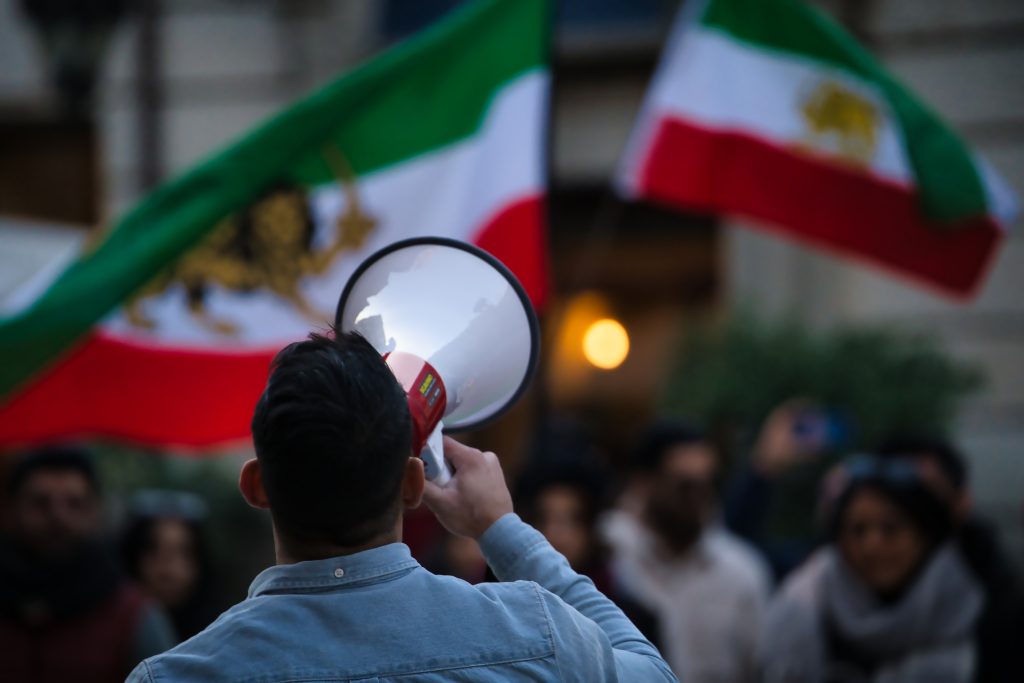
Raise your voice to support people in Iran who are protesting for their freedom.
We know that real, human stories matter. They determine what is believed and what is taught, so please join us today in spreading the real stories of the people in Iran.
Cutting through the noise of the news can be hard. Sign up to get our updates where we share news of peace and hear directly from local peacebuilders.